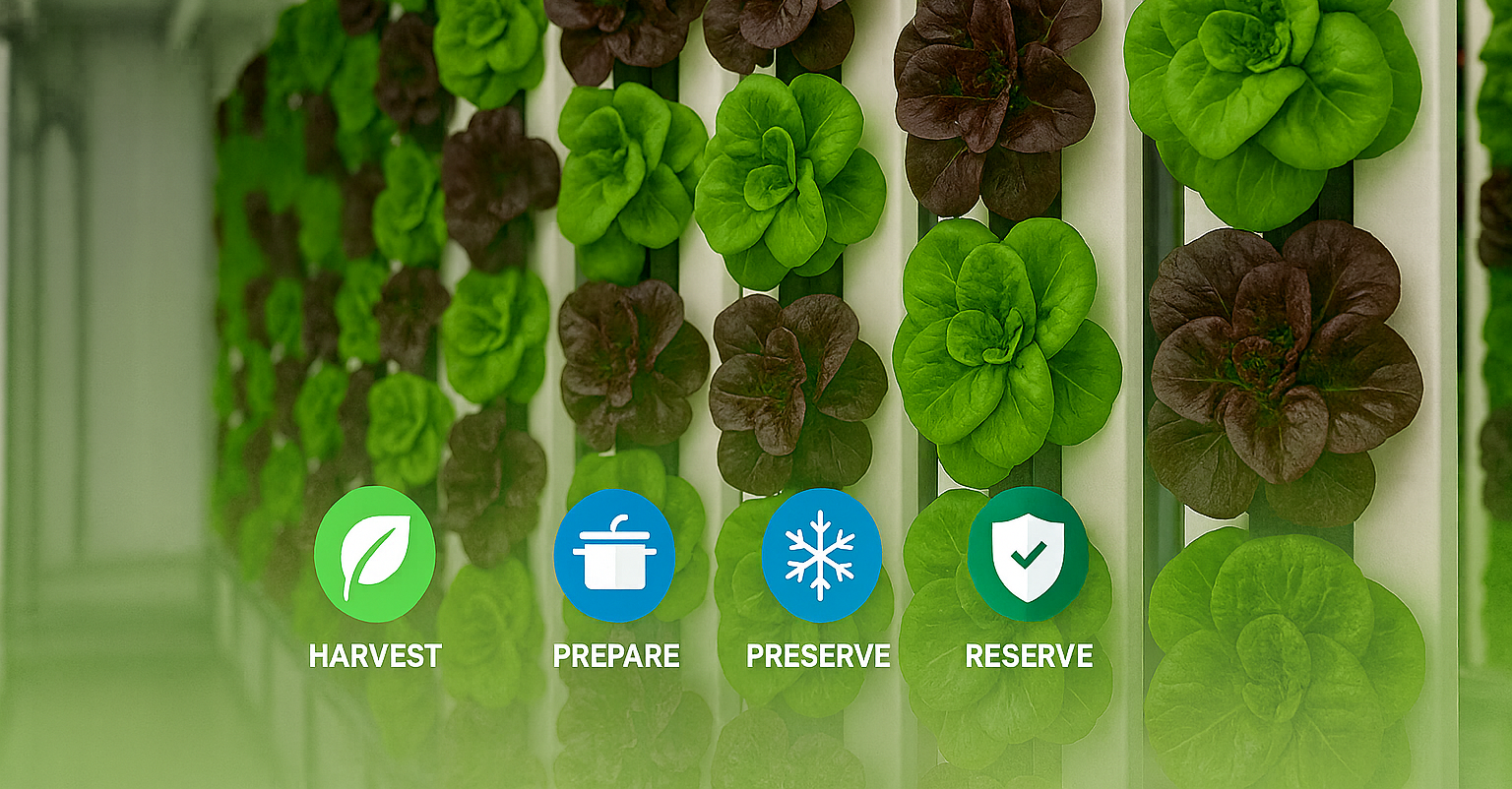
Agriponic Farms exists to eliminate food waste, strengthen food security, and make fresh, nutrient-dense food available to every community. Through our closed-loop Core-4 system—Harvest, Prepare, Preserve, Reserve—we transform local produce into year-round nutrition, turning fragmented supply chains into sustainable, hyper-local food hubs that feed people, not landfills.
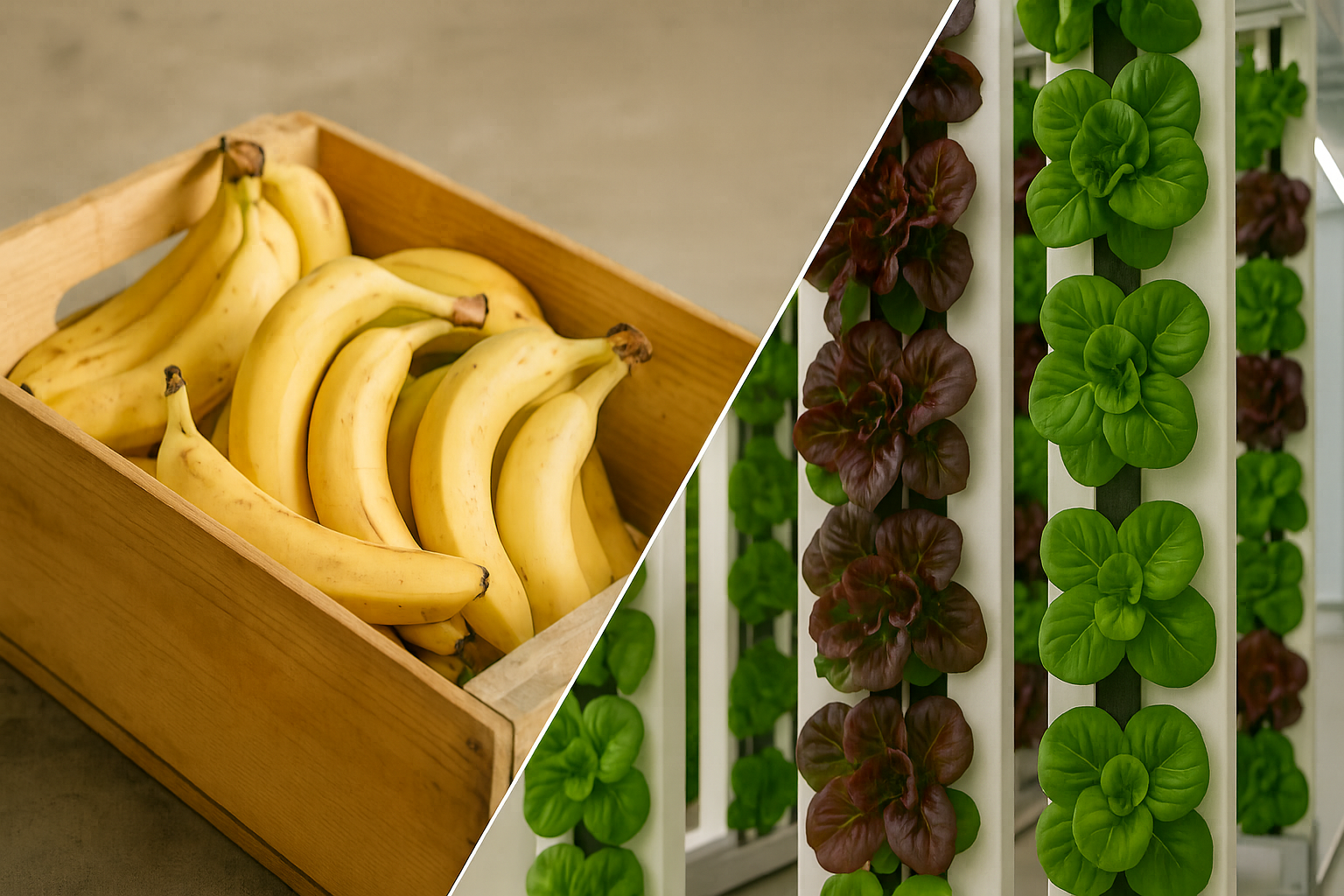
🌿 1. HARVEST
Goal: Maximize local food production and recovery.
- Hydroponic AgriPods:
Controlled-environment shipping-container farms that use 95% less water and ~30% less energy than conventional field farming.
Year-round growth of premium leafy greens, herbs, and other high-value crops—even where soil is degraded.
Continuous planting/harvesting cycles (e.g., 5,000 heads of lettuce per pod per month). - Food Rescue & Local Sourcing:
Capture surplus farm produce (unsellable due to size or cosmetic issues).
Recover unsold but safe foods from groceries, distributors, and farms.
Reduce the 40% U.S. food waste problem, with special focus on the 15% lost in transit by shortening supply chains.
🍳 2. Prepare
Goal: Turn fresh harvests & rescued foods into ready-to-eat, high-value products.
ChefPod
(Mobile Commercial Kitchen):
- USDA-certified kitchen in a mobile container.
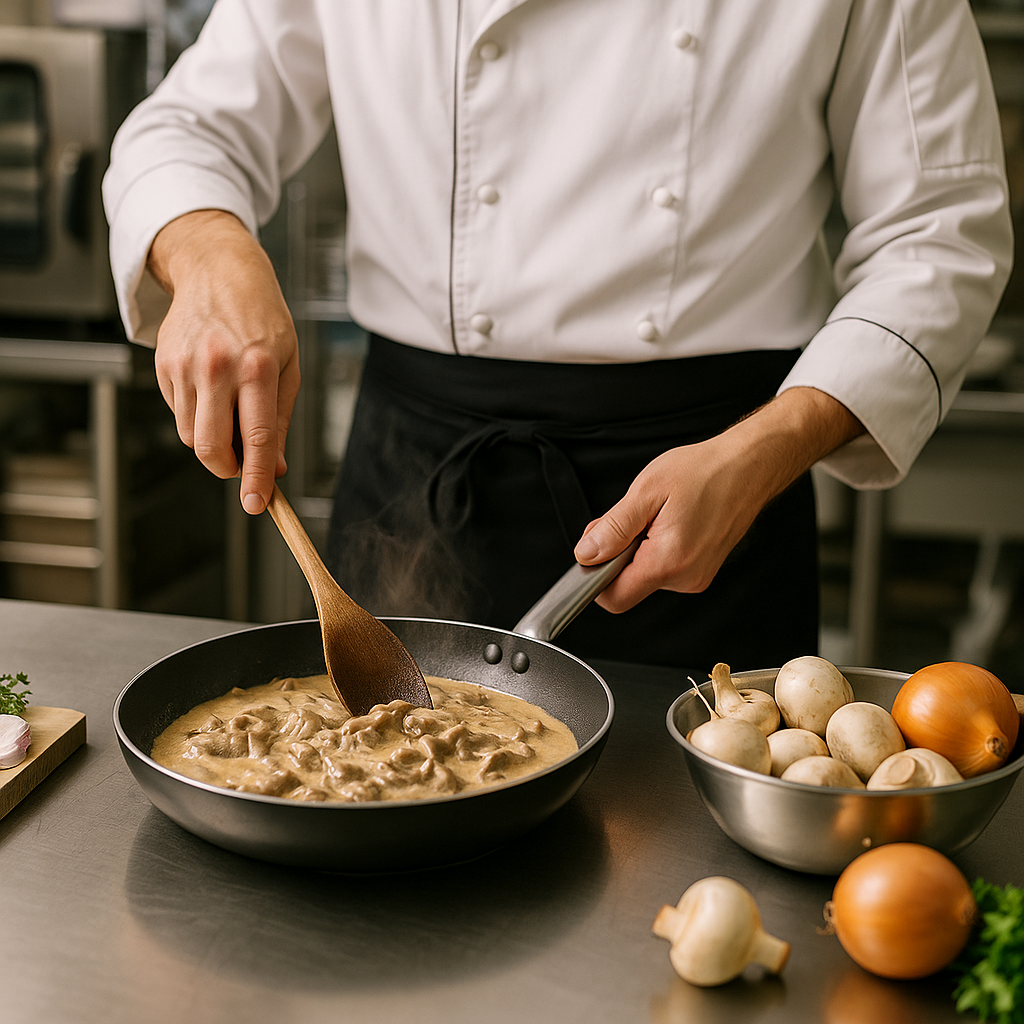
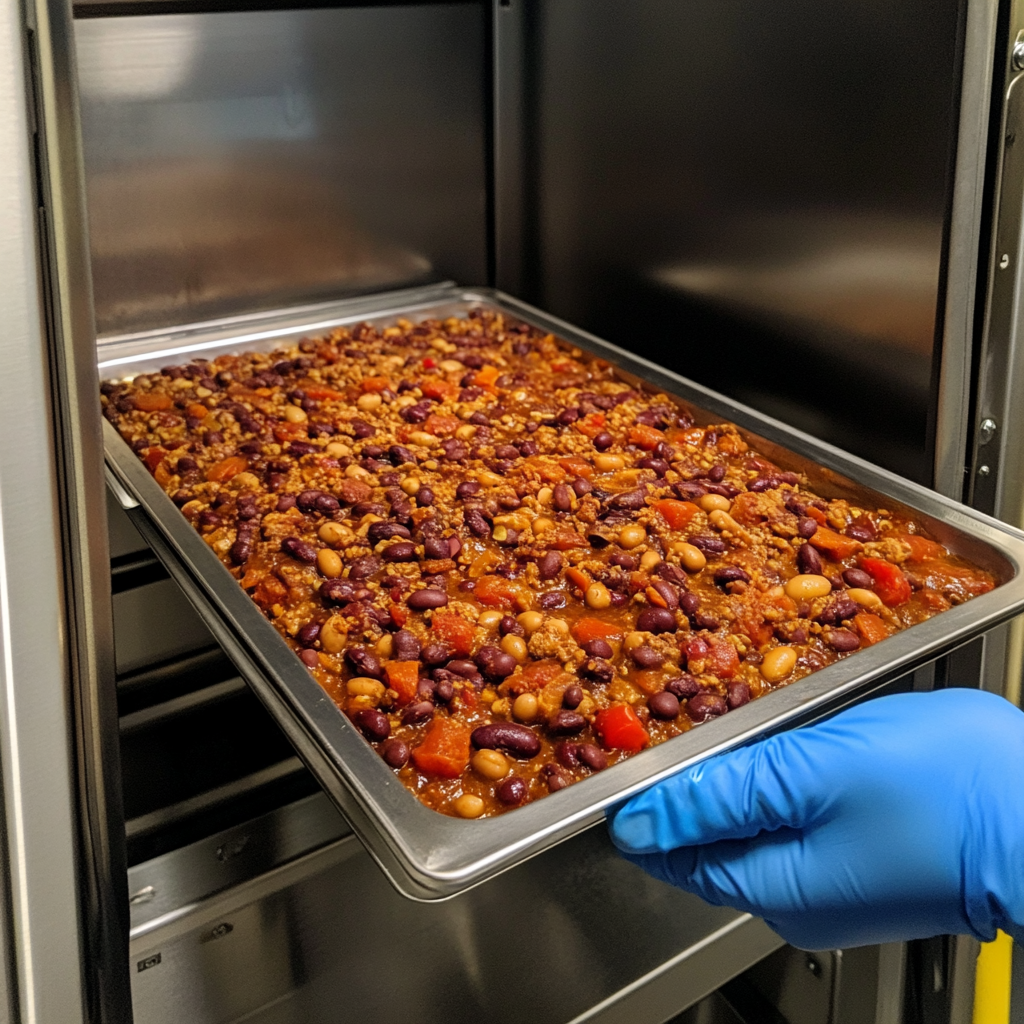
Prepares salads, soups, paninis, meal kits, and powders from local produce.
Enables farm-to-table meals at schools, farmers markets, and events.
- Culinary Upcycling:
Trim, stems, or “ugly” produce become smoothies, powders, or meal components.
Prevents edible food from going to waste.
- Community Engagement:
Cooking demos, nutrition education, and local sourcing partnerships with schools and restaurants.
❄️ 3. PRESERVE
Goal: Extend shelf life & create long-term food security.
ColdPod (Freeze-Drying & Stabilization):
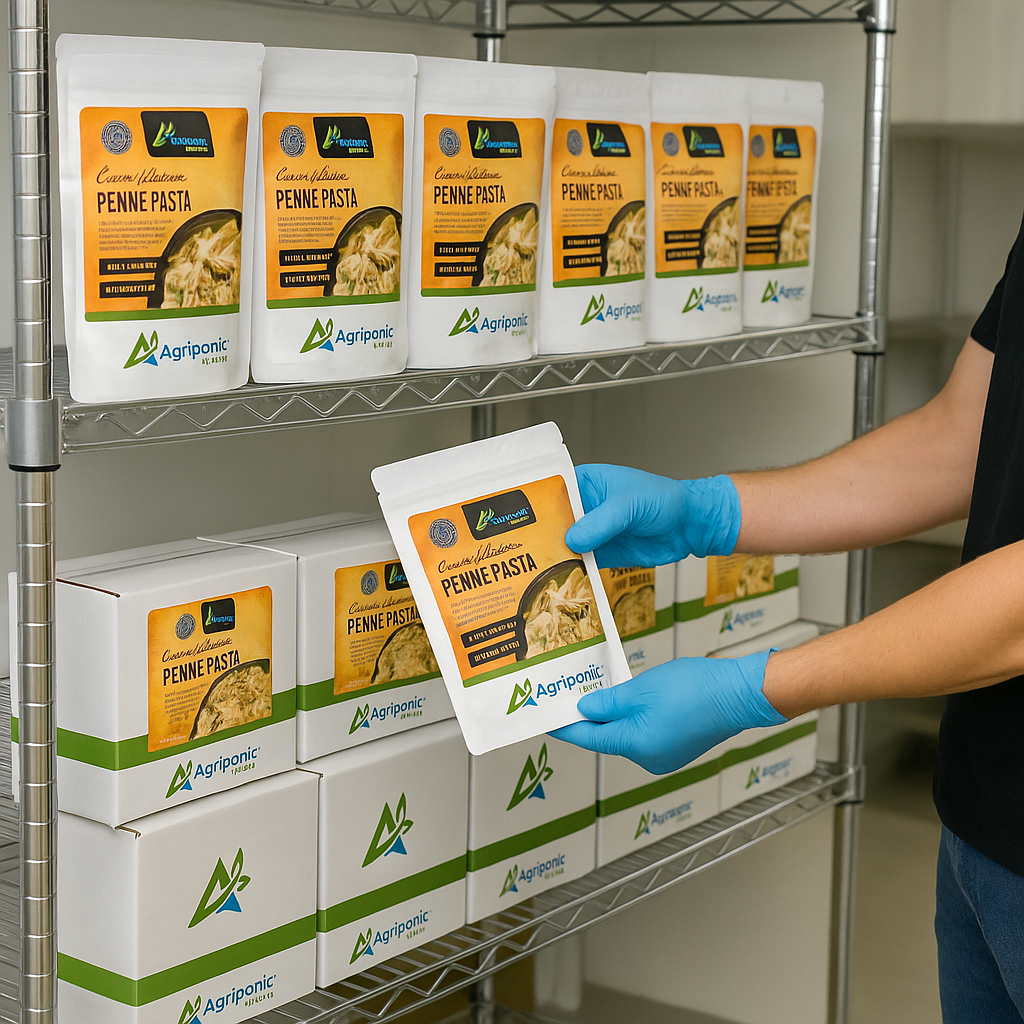
- State-of-the-art freeze dryers turn perishable food into lightweight, shelf-stable ingredients or full meals.
- Retains up to 97% of nutrients; perfect for emergency meals (MREs) and pantry storage.
- Allows bulk purchasing/rescuing at peak freshness and saving it for later use.
Value-Added Products:
- Greens Fusion powders, dried fruits, and veggie blends sold online and locally.
- Increases farm profitability while reducing loss.
Environmental Impact:
- Cuts landfill methane by keeping food out of the waste stream.
🏡 4. Reserve
Goal: Build resilient food reserves & sustainable economics.
SiloPod (Storage & MRE Reserve):
Long-term storage for up to 25 years.
- Acts as a community food bank & disaster reserve (storms, supply chain breaks).
- Supports schools, emergency services, and nonprofits.
Revenue & Donation Pathways:
- “Buy One, Give One” meal kits & powders fund donations to families in need.
Membership/donation programs help keep reserves stocked while supporting farm operations.
Resilient Local Supply Chain:
- Reduces dependence on distant farms (e.g., 90% of Florida’s lettuce comes from California).
- Keeps food close to the people who need it.

What Agriponic farms does
Agriponic Farms is a nonprofit organization focused on applied implementation,
not theory or pilot programs.
Our work includes:
- Developing local food hubs that integrate growing, kitchens, preservation, and reserve
Operating and supporting ChefPods, ColdPods, and SiloPod reserves
Training operators and partners to run Core-4 systems sustainably
Supporting schools, clinics, and communities with predictable food access
Demonstrating models that can be replicated elsewhere
We focus on building capacity, not chasing surplus.

Why Participation Matters
Most food programs intervene after failure occurs.
Core-4 infrastructure prevents failure from occurring in the first place.
Support enables:
- Equipment and facility build-out
- Workforce training and operations
- Preservation and reserve capacity
- Documentation and replication of working models
This is long-term work. It is not dramatic. It is structural.

Participate in Building the Core-4
Support for Agriponic Farms advances real, operating food infrastructure. Participation is
optional. The ideas stand on their own. Those who choose to participate help ensure that
communities can move from reaction to readiness.
Learn the system — Purchase We All Could Eat to understand how food security works when all four
functions are present.
Share the framework — Put the Core-4 language into classrooms, boardrooms, and policy discussions.
Build the infrastructure — All book proceeds and contributions support Agriponic Farms’
nonprofit work developing community food systems.
Thomas L. Pooser
Founder, Agriponic Farms
tom@agriponicfarms.com